Saturday, December 9, 2017

The Quality of Quantity


"Quantity has a quality of its own" is a statement attributed to Joseph Stalin which summarized the Soviet Union's approach to victory against the technologically superior Germans during WWII.   It was achieved through overwhelming numbers both in terms of industrial output and the willingness to throw bodies at the problem regardless of cost.  The Russian made Mosin Nagant rifle manufactured during the war years that was symbolic of that philosophy.  It was rough. The metal work  was imprecise and loose, the bolt was hard to operate and it was not as accurate as other rifles from the era I've shot.  However, it was cheap and it worked well enough that millions of Germans could attest to its effectiveness if they weren't dead.

Whether the masses in the US currently realize it or not we are in an economic war and to date it hasn't been going well.   Over the years foreign competitors have used a Quality of Quantity strategy to defeat US producers by flooding the market with low price, low quality products that, while inferior, are enough to seduce people with low incomes or folks just looking for a 'bargain'.  Enough shoppers in the US fell for it to allow foreign products to gain a beach head, from which they invaded markets for bigger ticket items like appliances and cars.  This strategy works because at the bottom of the market products are less able to differentiate themselves and  profit margins are generally smaller.  Foreign firms could compete easily here because prior to their arrival in the market prices were about as low as domestic producers could get them without breaking laws. The newcomers could compete here because they were willing to "throw bodies at the problem"  by cutting corners on workplace safety and environmental protections.  They were also able to make products that looked passable even though they were made of lower quality raw materials and produced to a lower quality standard.

The long term effect of this strategy has been a retreat of US producers from the low end of the market, if they are able to hold on at all.   This has the effect of skewing shoppers perception of the price difference between US and Chinese made goods.   The bottom of the line, entry level product is now cheaper than ever.   The US made products that have survived are usually higher end, where quality and reputation still matter.    It's an apple to oranges comparison.    Jeans, a formerly American symbol, are a good example.    The bottom end, made in Bangladesh jeans sold at Walmart go for $12.   A pair of 100% US made jeans costs $54.   Does that mean foreign jeans always cost  four times less?  Nope, a pair of Levi's runs at about $40.   Only 25% less.

This type of incorrect comparison leads to false, defeatist arguments claiming US industry is gone for good.   In actuality, the difference between comparable goods is smaller than we are led to think meaning that QoQ attacks can be defeated in several ways.

The first way is to reduce the difference in cost between foreign and US manufactured jeans.   This could be accomplished by simply enforcing uniform standards.   If Chinese Widget Co No. 2 wants to sell a product in the US, or if  Traitors, Inc wants to move their US production overseas, they should have to pay the same minimum wages to their employees regardless of country and meet the same regulatory standards for safety, health and environment.   If that happens their competitive advantage goes away.   If the competition is unwilling to play fair, a tariff, in an amount equal to what foreign producers are saving by holding themselves to lower standards must be imposed.   That solution seems pretty simple but so called free trade agreements have worked in the opposite direction, making it easier to bring in goods (bads?) made under looser standards from outside our borders and undercut domestic industry.   Applying equal standards is a top down strategy that works best on a national level.   Unfortunately, as evidenced by the ravaged towns and cities all over our landscape, our leaders have embraced gloabalization, blatantly lying about how it is making us all more prosperous.   In reality, it enriches a few at the top while workers in both the importing and exporting countries suffer.  For decades before the election of president Trump, even questioning free trade and globalization was taboo.  I have mixed feelings on the man but I was thrilled when he withdrew the US from the TransPacific partnership "free" trade agreement since it would have obligated the US to play on a field tilted against it.   The impending tax cut may also help, but it really depends on how it is implemented and at this point I have some doubts.   That story is still developing and I will write more when I know more.

Before there can be a top down solution people need to unite around the cause and work from the bottom up.   The masses have been lulled into complacency and distracted by advertising and cultural conditioning.   Most people don't think about where the things they buy come from.   That needs to change and it's where you and I can make the biggest difference.   We need to create awareness of the problem.   First, we all need to walk our talk because nobody wants to follow a hypocrite.   There are countless opportunities to bring up the subject of supporting American manufacturing in daily life.  When someone at the office is talking about what a great deal they got at the store, ask where it was made.   You don't need to lecture or shame them.  Just asking forces them to think about their decision.    You can use social media to show off a nice US made purchase once in awhile.  You don't have to shame people who buy Chinese, just emphasize that you like to buy high quality things and feel good supporting your economy.   We want to set a positive example since when people feel like they are being judged they become defensive.   We want people to want to be like us.   When enough people buy into our lifestyle then political change will happen organically because people who share our values will be in the majority. 

Thursday, November 23, 2017

Red, White and Blue Friday


Black Friday and the Christmas shopping season have been built up over the years into a huge display of consumerism.   I'm not going to lie, I loved it as a kid but now in adulthood it makes me sad to see so many people wrapped up in the pursuit of stuff.    I'm glad Thanksgiving comes immediately before the madness, as a time to do what's truly important - spend time with the family, share a meal and be thankful for all the good things already in our lives.  That said, going against social customs and family traditions would be awkward and probably hurt people's feelings so even if you're not a fan, chances are you are participating in the mass exchange of stuff that has become Christmas.   To get that stuff we have to buy it and to buy it somebody has to make it.   Sadly, the majority of that stuff is made in Asia, which means another year of the former wealth and power of the United States being siphoned away to foreign lands.

All is not lost though, there are still good US made options for those willing to do a little looking.   In fact, this is the most important time of year to make that choice because of the disproportionately large amount of money that will be spent in the next 31 days.   Retailers exist to make money and are always looking to provide what customers want so they can make as much as possible.   If they see more people are choosing to buy American, they will offer more options that fit that criterion, or even better, pressure suppliers currently producing overseas to shift their factories back to our own soil.   The story of Lincoln Logs, a toy I grew up playing with and remember fondly, is a good example of how perceived consumer demand resulted in an iconic American product being built in the land of its creation once again.   If you're interested and want to keep this success story going, you can find them for sale here:   Lincoln Logs  (This is an affiliate link, fyi).

Here are some additional ways in which you can help encourage retailers and manufacturers to offer products made in the USA:

  • Do people ask you what you want for Christmas?   Tell these people that you care deeply about supporting US workers and that gifts which do that are especially appreciated.    I've done this for years and now I've managed to get my dad partially on board as well.
  • When buying gifts for people who don't have a specific request, try finding a US made products first.  This scenario  also fits Secret Santa events and donations to Toys for Tots.
  • In cases where there is a specific request, like a good kitchen knife, look for American made options first.
  • When you're out shopping in physical store, if you can't find a US made options, stop by customer service and let them know the reason they missed out on a sale .   If you did find a good selection of US made goods drop a thank you note at customer service instead.   Many companies pay close attention to public feedback so if even a small number of us speak up, it may sway a decision maker to make the right decision for a change.
  • If you're shopping online and the product listing doesn't include a country of origin, ask a question or leave a comment if possible.
  • If you have a US made products you love enough to recommend, give them some love on social media.
  • Please share this blog on social media :)   You can find America Reforged on Facebook.
If you have an idea that you didn't see above, please put it in the comments.   This blog exists to spread tactics and encouragement in the fight to rebuild American industry so your thoughts are always welcome.    This Christmas, through our combined efforts we can help give a gift to all Americans - the gift of opportunity. 


Sunday, November 19, 2017

Repairing The US Economy Starts At Home


As  US made products become less and less common on store shelves, those of us who don't want to send our money overseas must get creative.   This is especially true when dealing with a sector of the economy that has been utterly destroyed by foreign competition and no US made option exists.  For example, try buying a new TV that says "Made in the USA."   Even in such cases, there is still something you can do to fight back - repair it.  Choosing to repair instead of replace may not bring US manufacturing back directly, but it starves our competition and allows us to invest the money we saved back into buying products that are still made in the USA.

If you're lucky, there still may be some businesses around you that repair major appliances.  If that is the case, please consider supporting them, since that recirculates money in your local economy rather than sending it to Asia.   The small appliance repair man seems to be a thing of the past however, so if you want to fix something that costs less than $500 or so, you may have to do it yourself.  Surprisingly, it isn't that hard most of the time and there is more information than ever before available to help you.   If you look on YouTube or elsewhere you can typically find info on diagnosing the problem and then see exactly how to fix it, usually specific to your exact model.   One upshot of mass producing a piece of shit is that most will break in a predictable way. 

I'm not talking idly.   Here is a recent example of  an easy repair I made that helped me keep some of my hard earned money out of China:

My house has a Keurig, which was here before I moved in with my girlfriend. It was made in China of course and unsurprisingly stopped functioning correctly after two years.  It would make a loud noise, like the water pump was running but then it would just keep going for minutes and then, when it finally brewed a cup of coffee it would only produce about half of a normal cup, even on the largest setting.   After about five minutes of research I narrowed it down to either a jammed water injector that shoots the water through the k-cup or a clogged water filter.   I tried cleaning out the injector with a paper clip but the problem persisted.   Next, I took off the water reservoir, emptied it and unscrewed the little screen over the water intake using a US made, long, Philip's head screwdriver.   It looked like a little lime scale had built up on the screen so I scrubbed the hell out of it, put it back on and when I fired it back up I got a perfect cup of coffee.   A total investment of about 20 minutes prevented us from having to spend $75 on another Chinese made POS.    Put another way that's like making $75 for 20 minutes of work, or $225 per hour - quite the motivation, like earning CEO wages but for doing actual work!   

Still on the subject of Keurig machines, the k-cups sold in stores are stupid expensive relative to a cup of coffee made with a normal drip style machine, 300-400% more in fact.   To my thrifty girlfriend's credit, she had already purchased a reusable plastic k-cup that worked well...until it broke.   At this point, when it comes time to replace anything I reflexively search for that item online and add a "Made in USA" to the end of the search term.   This time around I got lucky and found one not only from the USA but made.out.of.actual.metal.   It cost more than the cheap, plastic Chinese made ones but it works great and I also know that I will never, ever have to replace it.   For those of you stuck using a Keurig at home or work and want at least one part of it to be made in the USA I'm going to include a link:  Fill N Save Elite Series Stainless Steel Reusable K Cup for Keurig 2.0 and Backward Compatible With Original Keurig 1.0 Models. Silver   Full disclosure, it is an affiliate link so I may get paid if you click through and buy one.  This is my first time doing this, and, going forward I will always let you know if I am using one of these links.   All such links will point to products that have been made in the USA.  Amazon is a huge player in the retail economy and as such, I believe it is important to send signals, through the market and the way we spend our money, that we want goods that are made in America.

I've already got quite a bit of text here, and about 3 directions I could go with this discussion so my plan is to make Repairing Our Economy a recurring segment to cover some of the other projects I've done.   I could also get into the subject of coffee and globalism, so expect a post on that in the future.   I've also got a post about planned obsolescence in the draft phase at this point so some of what I was going to say here I will say there instead.   So in closing, give repair a try.  It's probably easier than you think and all it will cost you is five minutes to find out.   Better yet, if you have already made a repair you're proud of please share it in the comment.   Thanks for reading!


Sunday, April 23, 2017

Who Needs Who


You are the person responsible for making sure your life is what you want it to be.   You must look out for your own best interests and in order to do that you must know what they are with sharp clarity. If you don't there are legions of people seeking to convince you they know best and to follow them, sometime with altruistic intentions and other times with purely selfish aims.   It would be ideal if we could live a bubble, protected by our own unbreakable will but in the real world getting what we need means working with others.   Aligning with others whose goals are similar to our own can be a source of immense power but only if their intentions are true.

How do we know?   Discerning a true friend and ally from the cons, thieves, liars, leeches, the time wasters and various other pathological personalities out there is sometimes tough, but possible.  Again, the most reliable way to protect yourself is to know yourself.   Have a clear idea of who you are, what you want and how you plan to make that happen (not necessarily a thing, it could also be an outcome like good health).   These  things are your ruler with which to measure the claims of others.  If your ruler is flimsy and easily bent the measurements you make will be inaccurate.    One of the things I want is to pass this country on to future generations better than I found it, one whose economy is strong, creative and sustainable.   A life in which we get what we need by making it ourselves.    Having that ideal end goal in mind allows me to know who is is working against me and who is potentially working with me.

Potentially?  Yes, because what people say and what people do is not always the same.   Talk is cheap and so it doesn't cost a faker much to spin a great story hoping to reel in a sucker.   History is littered with more examples of such people than I can list here.   The only defense is to watch closely what a person does and ignore what they say they're doing.   Lets consider a few scenarios:

Scenario 1:
You've been at Company X for two years as a long term temp with no benefits with hopes of getting hired on full time and moving up to a position doing what you are passionate about.   Every three months when you're contract is up for renewal you mention this to your supervisor.   They tell you you're a stellar, hard working employee and that if you keep it up, they'll hire you on full time and move you into department you want.   Once in awhile you get a minor role in some of the work you want to be doing but 95% of the time you're doing data entry and answering phones.   Then two months back they hired a person to do the job you wanted.   You mention it to your supervisor and they tell you the same story as before, we value you just hold on.

Fast forward a year from this fork in the road.   Fork A:   A year later you are stuck in the same job, hearing the same justification to keep doing what you are doing.   Fork B:   You say fork it, and decide to take matters into your own hands.   You do some calling around to other companies, bullshit your way past secretaries and HR and find people doing the exact job you dream of doing.   You ask them how they got there and what you might need to do  in order to accomplish the same.   You keep the same shitty job to cover rent and food, but at night you're working on getting certifications and reading up on everything mentioned in your conversations with the pros.   Eventually you get your skills leveled up, start dropping highly targeted resumes and a  year later you've got not one but two job offers for positions doing what you want and paying way more than crappy temp job.  Which option serves you best?   In that option who holds the power.

Scenario 2:

You've been on 6 dates with a girl you're crazy about.  The dates went well enough so you try to bring the relationship to the next level.   She tells you you're sweet and amazing but that she isn't ready for that right now because she's still getting over her abusive,cheating jerk of an ex.   "Well, I'm clearly better than him," you think, " I'll prove to her that I'm worthy and when I do she'll give me the love I want".   And so you go on more expensive dates, flowers delivered to her job, help her with chores, when her car breaks down you give her rides and even give her money to help fix it.   She happily accepts these things but you notice the only times you hear from her are when you initiate contact or she needs something.   One day you log into Facebook and see her and her jerk ex are now friends and she's commented on several photos of his.   Think forward a year.   You keep doing the same things hoping she'll come around.   Are you happy?   Do you feel in control of the situation?    What if instead you decide to let Miss Hard-to-Get chill for a while and talk to a bunch of attractive girls you encounter in your daily life.   To your surprise some of them have the same qualities that made your crush attractive, and some of these are attracted to you too.   A few are calling you first, making efforts to show you they care.   Maybe Miss Hard-to-Get feels a little jealous and ups her game, maybe you like one of the new girls better.  Either way, are you happy in this situation?  Do you feel in control of the outcome?

In each example one outcome shows the power which comes from seeing options and following those paths which align with your internal compass until the desired destination is reached.    The other approach is one of being impeded by external barriers that others were allowed to define.  Power is options.  It is the ability to walk away from a bad choice because better choices are apparent.   It is needing them less than they need you.   With that in mind consider a final scenario.

You live and work in a small town.   There used to be four factories but 3 have closed and went overseas.   The call center in town did too.  You still have a job with an engineering firm, but the big companies you contract with are sending more work to India or China every year.  Main Street is desolate.   You need both hands to count your friends from high school who are on heroin, in jail or dead.   The house rep for your district is seeking a 5th term.   He is a member of your chosen party and you've voted for him before because he says he cares deeply about the middle class and works tirelessly every day to help them.   His ads show how he got some grant money to help retrain people who got laid off when the last factory closed.   You do some research and see that program helped 10 people retrain.  100 were fired when the plant closed.  Your rep says free trade will benefit everyone and that the economy is improving.   It's decision time.   What would you do?  


Thursday, April 6, 2017

A Small Taste of Victory


In my younger days my supply of cash was chronically tight so I got into the habit of cooking many of my own meals since it is wayyy cheaper than eating out or eating prepared foods out of the box or freezer.   I especially like recipes I can cook in bulk like chili, soups and curries that I can stretch even further with a little rice.   My financial situation has improved since then but the habit of home cooking has stayed with me.   I still like saving money because now I can build it up and invest it in high quality, American made goods that last a long time, usually paying me back eventually since those things don't break or wear out like cheaper, foreign made stuff does.

When I'm at work I generally stay in instead of hitting up a McDonalds or pizza joint.   I've done it for years but I've really got a good system going now.   These days I will will cook a big batch of something and move it from the big pot right into a pint mason jars while it's still hot.   A few years ago they were also selling a canning kit with a funnel that fit their jars perfectly.   I'll freeze those jars so I have a constant variety of frozen meals ready to go.   That also makes it easier to avoid the fast food circuit.    I've found that if I leave a jar to defrost all morning it is usually defrosted enough to pour out into a dish to heat up.   In a pinch you can do it right in the jar.   The added bonus?  You're not microwaving plastic.  In the event of a long power outage you could also throw them all right into a pressure cooker and can them for indefinite storage.   This method of food storage is cheap, versatile and durable.  Best of all it is made in the USA.

The jars can be heated but I do like a wider bowl.   My old one, a piece of USA made Corelle-ware, was great for use at home but a full pint jar was just a little too much to comfortably fit in that bowl without spilling.   Instead I bought, at a very reasonable price, a Pyrex bowl, also US made (see a pattern here?).   It's a little bigger and has a lid, so I can microwave stuff without exploding beans or carrots coating the inside of the public microwave.   All told it's a perfect system that allows me to conveniently eat a variety of delicious, nutritious, money saving food.   And with that money I can re-invest in more quality goods that were made in my home country and economy.

Here is a little recipe that is an example of what I like to cook and put in my jars:

Chicken Lentil Soup

Ingredients

  • 1 package of chicken drumsticks (5-6 drumsticks)
  • 1.5  chicken bouillon cubes
  • 2 medium onions
  • 5-6 stalks celery ( about 2 cups diced)
  • 4-5 carrots (about 2 cups diced)
  • 1 can of crushed tomato (14.5 oz can)
  • 2 cups dry lentils
  • 2 bay leaves
  • 1 tsp black pepper
  • 1 tsp dried thyme
  • 1/2 tsp dried parsley
  • 1/2 tsp dried sage
  • salt (to taste)
Cooking Instructions

  1.  Heat about 6 cups of water to a boil.   Add chicken drumsticks and bouillon cube.   Maintain boil for 40 mins.
  2. While chicken is cooking rinse lentils and dice onions, carrots, and celery.
  3.  Remove chicken from pot to cool.   Add lentils, veggies and spices.   Cover and cook on low heat until it boils lightly.
  4. When chicken is cool enough to handle remove and discard skin.   I use my hands to pull the chicken off the bone and break it up into bite sized pieces.   Add to pot.
  5. Cook for 1 hour or until lentil are soft.   
  6. Makes 6-8 servings and costs about $8 dollars to make.  Enjoy!
If you have any of your own recipes or links to such I encourage you to share them in the comments.  


Thursday, March 30, 2017

America Reforged Reforged

I managed to get a few essays into this project when life presented a possibility to improve my financial situation through several related opportunities.   It took most of my free time for several months, but one of those paid off.   Life was busy and it was easy to let this blog slip.   However, the message is bigger than me and more important than ever so I will try again.

In the time since I last wrote we had the ugliest election in living memory.   It was the money and power elite who have been getting ever richer off of globalization and automation facing off against several populist candidates speaking for everyday people.   In other words the people who run the world vs the people who actually make the world run.   There has already been much ink spilled over the election and it's aftermath, so I will focus on the specific implications it has for our fight to save the American economy and also the course this blog will take.

The most important thing the election showed was that voters of every political affiliation see that despite what we hear from the media and politicians our country is declining, that the jobs are leaving and that business as usual means the situation will only get worse.    Hillary Clinton was the culmination and human embodiment of the status quo - working for it's own power, saying or doing anything, no matter how wrong or hypocritical, to make it happen.   She had the entire system on her side but she still narrowly lost.   Despite the best efforts of the elite the voices of the average working person in the US were heard and they said, "If you ignore us YOU. WILL. LOSE."

The tone of this blog will continue to reflect that reality.   If you want to fight to restore the American economy you are welcome here.   Party affiliation or lack thereof is secondary.   In the election I saw Sanders supporters and Trump supporters saying similar things on the subject of jobs and free trade.   On social issues the two groups are pretty far apart but it would be a mistake to never talk or work together because of that.   The Trans Pacific Partnership (TPP) was a great example - both opposed it.   Trump happened to win and now it is dead.   Had Sanders wound up in the White House the same thing would probably be true.   That was a huge victory for all Americans, except for the wealthy elite who would have used it to get even richer by firing people in this country and sending their jobs to China.

The point here is that politics is not a basketball or football game.   In sports there is an emotional appeal to picking a team to stick with through thick and thin, to see them win the championship and opponents leave in defeat.   In politics it is tempting to do the same thing, however, athletes are only there to win or lose.  It's a simple arrangement.    They are not there to represent your interests.   That is the realm of politics and the purpose of that realm is much more complicated than winning or losing a vote.  When laws are passed or repealed there are broad economic and social consequences that can span generations, and which affect some people more than others.   Often laws are an attempt to address complex problems.   "How do we provide and pay for healthcare for 300+ million people?" is a much heavier question than, "Which group of guys is better at moving a ball around?"

For decades prior to the 2016 election voters were presented with two options.   A Republican candidate who supported globalization vs. a Democrat who supported globalization.   Looking at it through a sports lens, each election one team won, yet through an economic lens most Americans lost.   The US political system is ideally suited for those in power to bury ideas that would benefit the average person by instead proposing two ideas that promote their agenda and then getting the two sides to attack each other, their anger clouding their ability to clearly see the game in which they are used as pawns.    One of the key purposes of this blog will be to find and spread the better option that is missing from political dialogue in this country.   The best way to defeat a stupid system is to show that it can be better.  I realize this will probably alienate potential readers that have been highly polarized to one party or the other but my hope is that there are still enough people out there looking for a better way who resonate with the ideas here.   More optimistically, even if we disagree on specific political actions that could help restore American industry, there is plenty that can be done on the individual level to help and I will be posting plenty of ideas/field reports on that as well.   Until next time, keep that fire burning.


Monday, February 1, 2016

Want to sell it here? Then you'd better make it here.

Analyzing the trade policy of the US government using the "Watch what I do, not what I say" method it is obvious their goal is to expedite the outsourcing of US jobs while enriching the people doing the outsourcing.  It is a happy accident then that the foreign policy of the US government has had the unexpected consequence of actually bringing the production of an iconic foreign product to the US.

In reaction to the 2014 Russian takeover of the Crimean peninsula from Ukraine, the Obama administration issued an executive order prohibiting the import of Russian guns.   This includes civilian legal versions of the AK-47 rifle - one of the most recognized and sought after firearms on the planet.  Within days the remaining Russian made guns were snatched up by AK enthusiasts, collectors and savvy investors.

The ban  disrupted the old supply but where there is demand the desire to make money will always create a new supplier. The company that used to import the rifles from Russia is now set to begin producing them in Florida instead.  The gun issue stirs up a lot of emotion on both sides, so please realize this post is just using a story about guns as an example to illustrate a much bigger picture.  This story shows that if the government of this country insists on keeping out a foreign product it can  succeed if the political will is there.  It shows that the market will still provide the products customers want and that it will produce them inside the nation's borders if necessary and friends it is beyond necessary.  It raises the question:  If a simple policy change means we can make something with fundamentally Russian DNA in America, why can't it also mean that we can make something quintessentially American like a pair of Levi's or a Ford pick up in America?  

This story can be repeated but like I said, that will take political will.  The presidential primary season kicks of today, the perfect opportunity for members of both parties to remind their prospective leaders that standing up for American industry is not a partisan issue - it is the will of the people and a requirement to get elected.

Sunday, January 10, 2016

The Friend Of My Enemy Is My Friend - Part 1: Operation Razor Burn

Readers, today I am excited because it is time to go on the offensive. I'm going to lay down a little background in the next three paragraphs but if you're eager to get fighting by all means skip ahead. 

Buying American is absolutely essential to preserving our economy but there are not enough of us yet doing it. The papers still read like obituaries for the industry of our nation as they call out the death toll of our dead factories. Too many people are still indifferent and apathetic about the damage their choices are causing. Why is that?  

The primary driver of consumer preferences is advertising. Over the decades advertisers have become skilled at hacking our psychology to make us want what they need us to want without asking too many questions. Until recently advertising was expensive and controlled by large corporate gatekeepers at newspapers, radio stations and TV networks. Mass advertising is effective but it also expensive and imprecise. That began to change with advent of the internet and shifted into overdrive as social media became a phenomenon.   

When properly harnessed social media is an advertisers paradise for three reasons. First, conventional advertising is impersonal and customers are jaded from being subjected to ads constantly. However, when someone they know suggests or endorses a product it bypasses the usual skepticism for advertising because it is coming from a trusted source. A personal recommendation caries the weight of a hundred commercials and a thousand banner ads. Second, it is relatively inexpensive to run a website or create a Facebook page. Third, this technology uses information gathered by cookies, small programs that run in the back of our internet browsing software to record our online activity, in combination with complex algorithms to create advertising that accurately targets individual user tastes. This combination is extremely powerful, relatively new and those that master this medium will master the market. 

Social media advertising is powerful , and like with most powerful things, that power can be used to destroy or create. At the moment, unfortunately social media is being used as a highly effective vehicle to push products made in China and the host of other nations unfairly undercutting US companies. The power they are using is not their own however - it is OURS because we ARE the social network. This makes them extremely vulnerable to attack by the same people to which they are trying to sell their products.  

For example, a year ago I saw on Facebook a slick commercial for Dollar Shave Club and decided to check it out. They were indeed a little cheaper but of course I had to check - are they made in the USA? The answer is NO. Their website doesn't specify where just "Overseas."  To make matters worse their ads are now disingenuously smearing their competition, much of which produces their razor blades in the United States ( Gillette produces theirs in Boston, MA, Edgewell produces theirs in Milford, Connecticut). Fuck. That. Noise.  It's America, you can say what you want, but you'd better be prepared to catch hell from the likes of us.

I am calling on all my readers to go on Facebook and find Dollar Shave Club. They are an enemy of the American worker but “like” their page anyway, because in this game the friend of my enemy is my friend. Once you do so you can write on their page and post fun things like this:


 I'm sure I'll be banned from their page eventually but in the meantime a small part of their Facebook page is driving traffic to their American competitors.    Hopefully they won't notice and the post will stay up.   I'm just one man after all.  However, if hundreds, then thousands start doing the same thing then we'll have their attention.   We'll have their customer's attention as well and a chance to make them question their programming and realize that lots of people are starting to fight the status quo that is destroying the economy of our country.

 Like I said, I'm sure we'll start getting banned from their page and that is why we need to bring as many people into this as possible, keeping a constant stream of exactly the kind of attention companies like DSC don't want.   With your support we can make social media a place that the companies selling out this country will fear to tread.  

** I forgot to mention this when I first wrote this post that I have no connection to any of the companies mentioned within it.

Saturday, January 2, 2016

"I can't afford to buy American."


Long before I started this blog I've been spreading the word about the need to buy American.  As you might expect, I often encounter a level of willful ignorance that is staggering.   It's enough to drive a man to enthusiastically support one of the quality whiskey distilleries in this country.   However, I will focus my anger on taking apart one of the ridiculous arguments I most often hear and save the booze for celebrating if I manage to change even one mind with this post.

The self defeating statement I see so often usually goes something like, "I want to buy American but it's too expensive."   One of the first responses that I go to when this lame excuse comes up is, "How hard have you tried to find something made in this country?"   The fact is if you don't check, you don't really know.  For example, I was shopping for work socks once and decided to check labels. The Fruit of the Loom socks I looked at were made in the US.  The Dickies socks next to them were made in Pakistan.  There was NO price difference between the almost identical socks.  By taking  one minute to read labels I kept money circulating in the economy I live in and prevented sending that money to Pakistan, the country that sheltered Osama Bin Laden for years.  Label checking is the easiest way to start making choices that build this country up rather than taking it apart.  The next time you go shopping with friends and family is a great time to conspicuously set the right example.

The previous example was the optimum situation.   Unfortunately US manufacturers are forced to compete with manufacturers in countries with weak or non-existent laws to protect their workers by requiring fair compensation or safe working conditions, protect the environment from excessive pollution or protect their subjects right to speak out or organize.  Companies in those countries pay lower taxes because there are no safety net programs to aid the elderly, the ill or the poor. Those safeguards are a vital part of any modern civilized nation but they cost money and evading their responsibility allows these foreign companies to charge a lower price than something made here.

Buying products from these countries has put millions out of work in the US.  Some of those people get new jobs but many don't pay as well as their old positions.  People who can no longer make ends meet with their new service sector job or those that can't find a new job at all still need to live somewhere, they need to eat, they need to make sure their kids have a jacket for winter and can see a doctor when they are sick.  These people may prefer to earn their own way through life but if push comes to shove do you think they will let their kids go hungry and cold if there are programs to help them?   Buying foreign made products is putting these people directly onto programs like welfare, medicaid, food stamps, section 8 and HEAP.   Maybe you can save 20% on that "Made in China" frying pan, but how much do you wind up paying back out to support the people that lost their jobs because millions of other people made the same decision to take short term savings instead of making a long term investment in their country?   The best way to keep people off these programs is to make sure they have plenty of employment opportunities and that starts by supporting our domestic industries.

It would be naive to assume that if a company treats its own workers poorly that it would have any higher regard for its customers.  One subtle tactic they use is to entice shoppers with lower prices by using cheaper materials and methods that result in a product that looks similar but inferior in quality.   This shortcut is a form of planned obsolescence that only works because people are easily blinded by a so-called good deal.  Long term this is insidious because it conditions people to believe that prices that low are normal.  It is almost like a form of addiction - clearly bad in the long run but hard to break away from once the pattern is set. When they're buying that crappy saw from Harbor Freight they aren't taking into consideration that it may only last for a few jobs before it breaks and has to be replaced.  They may not think that their pet food while cheap contains materials that may sicken or kill their pet.  They may not take the time to research and see if the toy their young child puts in its mouth contains heavy metals.  The cost of needing to replace a given item is easy to calculate, but putting a value on destroyed health or loss of a loved one is nearly impossible because the loss is so great.  If the price of imports reflected these risks directly, right at the store chances are the ones with the "Made in the USA" tag would look a lot more appealing.

The one key message in this post is that there are costs you pay that are not apparent in the price tag at the store.  Foreign made products may sometimes be cheaper but we can't afford to pay the price of all the hidden consequences.  I may be preaching to the choir with some of you but many people do not think this way.   Our job is to get the message into the wider consciousness of the public.  By all means, help push this message out to the various corners of the internet but chances are the example you set and the conversations you have with the people you know the best will have the most impact.  I'd like to hear your stories about such exploits in the comments section of this post so others can use good examples and avoid the pitfalls others may have faced.  Thanks for reading and good luck out there.


Tuesday, December 22, 2015

Slavery in 2015

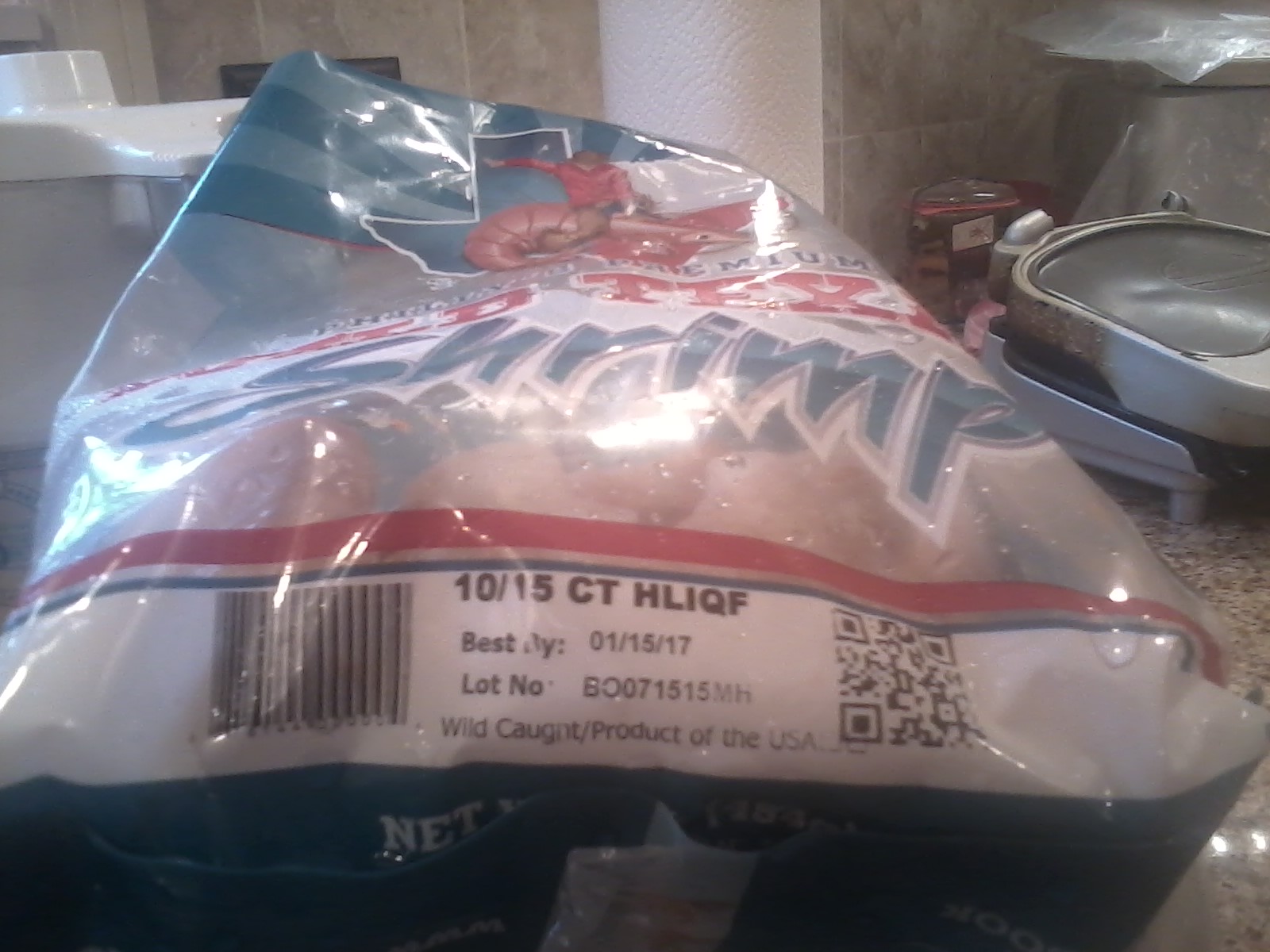
The free market is like a mischievous genie, it is very powerful and asked properly give you whatever you wish -unintended consequences and all.  If we ask for the cheapest price the market will very effectively match us up with a producer that is willing to offer the desired goods at said price.  For example, if we like shrimp, and our only criterion is the price we pay at the store we may be horrified to learn later that slave labor was used to peel the shrimp in Thailand.  "You don't like the idea of slave labor?" the market genie asks with a smirk, "you didn't say anything about not wanting that when you asked for cheap shrimp."

Here are some other things that customers did not consider when they bought cheap Thai shrimp, "Inside the large warehouse, toilets overflowed with feces, and the putrid smell of raw sewage wafted from an open gutter just outside the work area. Young children ran barefoot through suffocating dorm rooms. Entire families labored side-by-side at rows of stainless steel counters piled high with tubs of shrimp." Had those customers looked deeper perhaps they would not be dining on food contaminated with the fecal material of the slaves that prepared it.

In the US there are laws against this degree of shameless human exploitation. Once in a while there are news stories about illegal working conditions but nothing as egregious as what was just observed in Thailand.  The current arrangement is a bad deal for most of the people involved.  The workers in Thailand are working against their will for nothing so clearly they get the worst of it.  In the US shrimp producers cannot compete with foreign imports that use slave labor because while in no way ethical, slavery is certainly cheap if you are the producer.   US customers get dirty shrimp made by slaves - nothing to feel good about.  The winners are the owners and middlemen, the ones who came out on top by having the fewest scruples about how they make their money.

As human beings we have a duty to each other to do better than this.  Some governments have acted to protect foreign workers and their citizens.   According to the article, "The European Union issued a warning earlier this year that tripled seafood import tariffs, and is expected to decide next month whether to impose an outright ban." Prior to this latest news, the US actually excluded Thai shrimp producers from tariffs and reduced Tariffs on Vietnamese shrimp .   Hopefully these latest revelations of slavery will change the sentiment of the government, but their previous behavior actually enabled this problem.

I encourage you to join me in contacting our elected representatives to take action on this matter.  However, there is something more immediate you can do.   Be careful what you wish for from the market genie.  Make sure to ask for shrimp that are caught by American fisherman in US waters.  In the next few days there will be many Christmas parties over the next few days and many of them will have a plate of shrimp.   Now is a great time to bring up facts about the shrimp entering our country from foreign sources.  If it turns out the shrimp being served are caught in the US, thank and congratulate them.   If not, don't demonize your host, but simply tell them what you know and that you trust that they will make the right decision in the future now that they know.   The market genie gives us the economy we all wish for, not in one big wish but through millions of small choices. Please, help spread the word on this issue so that more of those choices are good ones.

Update:  Bought these guys to serve at the family Christmas Eve get-together.

Monday, December 14, 2015

Not sold on Amazon

Having worked in a retail environment in the past, I learned that successful companies take customer feedback seriously.  It is not uncommon for managers to review surveys, comment cards and online reviews to help understand what their customers want.   As an employee this feedback often filtered down to us in meetings or training.  One comment may not make that big of an impression but if readers here and elsewhere swarm a particular company they are more likely to perceive a trend and change their behavior.

Below is a note I just sent to amazon.com's customer feedback department.   I generally adopt a polite tone but still clearly point out that they are losing potential business because they are not carrying the products I want - products made in the USA.  I encourage you to do the same.  You are welcome to copy the text below.  Contact Amazon.com Here

Dear Amazon,

Mounting evidence has led me to believe that many of the economic problems being faced in the economy of the US are the result of the outsourcing of US jobs. I want to make purchases from as many American companies as I can so that I can keep myself, my family, friends and fellow citizens employed and productive. The most basic part of that choice is the ability to determine where a product was made. In conventional stores it is fairly easy to look at the label for the country of origin but more difficult when shopping online.

Recently I was shopping for a backpack and saw a link to your site. I like amazon.com - your website is very easy to use, seems secure and has a good selection of products at reasonable prices. In this case though, I chose not to buy the product because I could not determine where it came from. As an amazon customer I would be much more likely to use your site and make purchases if your company could consistently and prominently display where each item is manufactured or even enable your search tool to filter results based on that criterion.

Thanks for reading. I look forward to many future purchases of American made goods through your website.

Sincerely,

Michael L

The Gift of Opportunity

Each Christmas I see more appeals for donations to the needy than the year before.  As the US economy is slowly hollowed out by globalization it makes sense that more and more people find themselves in need.   I applaud the generosity of all those who still have extra to give.  The problem is that if current trends continue next year there will be more people who need donations and fewer with extra to give.   The cause is simple - people don't have enough money because there is a shortage of jobs and an even greater shortage of jobs that pay well.

 Let's say Stan works in Milwaukee, WI making hand tools.  If enough of the wrenches and hammers and tape measures Stan helps make wind up under Christmas trees this year his factory stays open, he keeps getting paid and can afford to put presents under the tree next year.   If enough of those tools are made by Jianguo in Shanghai instead Stans's factory closes and Christmas next year looks a lot less cheerful.  Maybe there will still be Christmas dinner with the help of the local food bank.  Maybe there will be a few presents thanks to Toys-for-Tots.   However, like most Americans Stan would prefer to earn those things himself - all he really needs is an opportunity. 

As we shop for gifts for our loved ones this year we have the chance to give another at the same time – the gift of opportunity to the millions of Americans like Jim who are eager for the chance to make an honest, secure living.  We get the economy we choose and the choice is in your hands and mine.  This time of year is the most important to buy American made products because of the oversized impact the holiday shopping season has on the economy and retailers.  Businesses cannot afford to flop on holiday sales.  You don’t have to look any further than all the news reports, the commercials, the Sunday paper that’s thicker than a phonebook with ads, the sales, the promotions, the encroachment of Black Friday in Thanksgiving.   Everybody selling something is crazy to get your money right now.   What a perfect time to make a statement that says, “You can have it, but only if it was made by someone in this country.” 


The more of us there are insisting that what we buy should come from where we live the louder our message will be.

Thursday, December 10, 2015

Beneath the rust there is Steel.

I grew up in a small town in central New York in the 80's and 90's.  I look back fondly on that time and for many years wanted to return to where I grew up.  I think the moment that changed was when I returned for the funeral of a dear friend who was lost to suicide, driving around after calling hours and seeing empty windows where there had once been stores, houses that had once been well kept now falling apart.   On that gloomy day I realized that I could physically return any time but that the place I remembered and loved had changed almost beyond recognition, shrouded in a dingy hopelessness that infected my lost friend's heart.

It is hard to have hope and sense of purpose when you are unemployed, or the place you work is constantly downsizing or laying people off.  How can you be optimistic that things will get better if you are working as hard as you can (if you can find work) and the best outcome you can hope for is to stay in place a little longer. That pattern has now been at work for decades and it is no longer possible to keep up appearances.  There is no way to conceal or dismiss miss the slow motion destruction that turned not just my town or county or state but huge swaths of the entire country into ruin.

I'm a perceptive person.  I've always enjoyed observing the world and figuring out how things work.  I thrive on taking that knowledge and using it to create new things or solve problems.  I'm not a sit-down-and-take-it kind of guy.  I've spent a lot of time thinking about the fate of my town and all those like it and realize it didn't have to be this way.  The current state of affairs in the cumulative effect of a lot of bad decisions and it fills me with burning anger to think that when given the chance to choose a better future so many have chosen selfishly instead.

Living in such a twisted system it often feels like life takes turns burning us then beating us flat.   Sometimes it feels like torture but if nothing else my message is that in the hellforge of our struggle we are not being destroyed. Unbeknownst to our tormentors we are taking the shape of a deadly sharp sword that will cut through the lies, the empty promises, the greed and the bullshit that seek to keep us from building a world we actually want to live in.  Those who benefit from the current status quo will fight viciously to keep it, but we will win and in the heat of that battle we will reforge America.